Most "best e-bike" lists rank bikes on spec sheets. This one ranks the brands we have actually researched on what matters after the box arrives: published warranty terms, return costs, parts availability, and whether the listing tells you enough to buy with confidence. We cover three: G-FORCE, a direct-to-consumer e-bike seller for the lower 48 states; Fucare, a budget fat-tire and all-wheel-drive specialist; and Bike Ninja, a UK price comparison site that is not a shop at all.
None of the three is a standout in our reviews, and each comes with a real catch, so read the caveats. Budget e-bikes can be good value, but the fine print carries more weight than it does with a $4,000 bike from a local shop.
Rankings
| Rank | Brand | Best for | Prices we saw | Warranty | Returns |
|---|---|---|---|---|---|
| 1 | G-FORCE | Budget full-size, step-thru, and folding e-bikes in the lower 48 | About $755 to $1,499 per bike | 1 year, frame and battery | 10% fee on any return or cancellation |
| 2 | Fucare | Fat-tire, dual-battery, and AWD e-bikes, plus parts | Bikes up to $1,699; parts $29 to $699 | 1 year advertised | 30-day trial advertised; terms not readable |
| 3 | Bike Ninja | UK shoppers comparing prices across retailers | Not a retailer | Set by each retailer | Set by each retailer |
1. G-FORCE: best overall
G-FORCE and Fucare finished neck and neck in our reviews, but G-FORCE takes the top spot because its policies are actually written down. Shipping is free to the 48 contiguous states, orders process in 1 to 3 business days, and delivery takes about 3 to 7 business days. The 1-year limited warranty covers manufacturing defects including frames and batteries, and shipping damage. There is a published phone line and email.
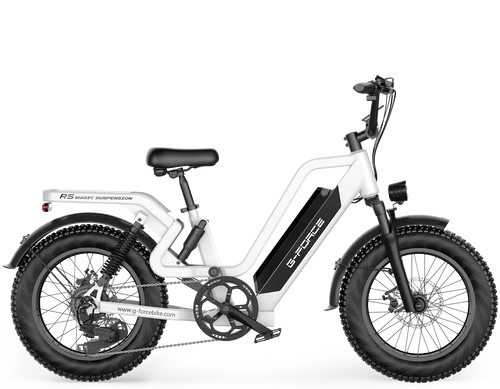
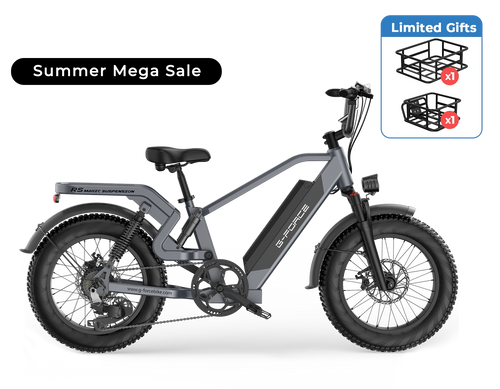
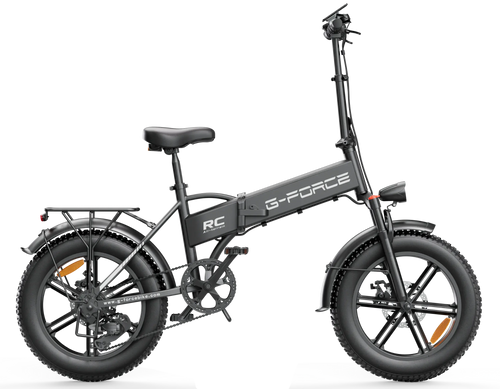
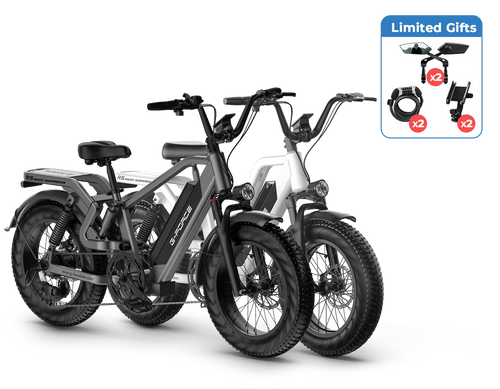
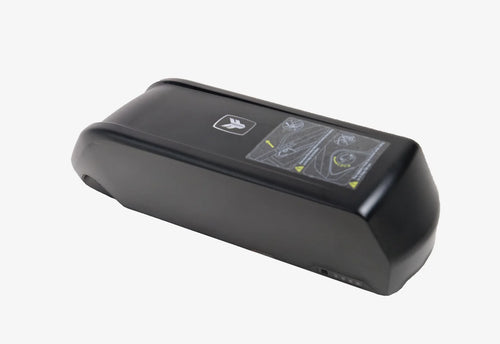
The core of the lineup is the RS platform: a 750W rear hub motor with 1,300W peak and 85Nm of torque, hydraulic brakes, and suspension. You choose a 748Wh battery ($1,299, claimed 45 to 60 miles) or a 1,200Wh battery ($1,499, claimed 85 to 100 miles). It comes as the high-step RS or the step-through RS ST. A two-bike combo runs $2,498 to $2,898, about $100 less than buying two singles. The RC folding bike starts around $755, with batteries from 624Wh to 864Wh.
The catches:
- A 10% processing fee applies to any returned or canceled order, and no return window is stated in the policy text we reviewed. On a $1,299 bike that is about $130 to change your mind.
- Keep the shipping box for at least 14 days, or a return costs another $50 to $90 for a replacement box.
- The RS ST appears at both $699 and $1,299. The $699 option is a used bike, and its condition and warranty are not explained on the listing. Get those terms in writing before choosing it.
- Several listings, including the RC folding bike and the DE-S cargo bike, have no description, so motor, weight, and payload are unknown. Ask before buying.
- No shipping to Alaska, Hawaii, or outside the lower 48 from the US store.
2. Fucare: best for fat tires and long range
Fucare builds fat-tire e-bikes with dual batteries and all-wheel drive at a budget ceiling of $1,699. The Gemini Sport, Gemini X Sport, and Scorpio Sport are listed with AWD, and the Libra is a two-seater. Dual 30Ah battery setups target riders who want long range.
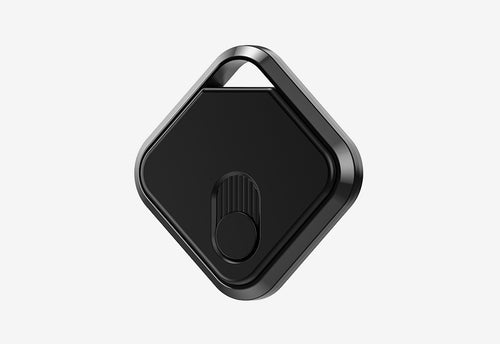
Fucare's real strength is long-term ownership. It sells model-specific parts directly: a 48V 20Ah LG-cell battery (996Wh) for the Libra and Scorpio at $699, a 10.4Ah Gemini battery at $499, a front fork with preload and lockout for $260, and 20 by 4 inch all-terrain tires with tubes for $159 a pair. A $39.99 Bluetooth tag works with Apple's Find My network for theft recovery.
The catches:
- Fucare's shipping, return, and warranty pages didn't load as readable text in our research. The site advertises a 30-day trial and a 1-year warranty, but we couldn't verify terms such as who pays return freight on a bike.
- E-bikes weren't in the in-stock product data we collected, so check availability.
- Parts are pricey, with many small components at $39 to $79, and some listings (toolkit, saddle, crankset) have no description at all.
- Fat-tire, dual-motor bikes are heavy to carry upstairs and store.
Email or call support and get the trial and warranty terms confirmed before ordering.
3. Bike Ninja: useful for UK shoppers, but not a store
Bike Ninja is a UK e-bike comparison site with live retailer prices, price history, and Cycle to Work savings estimates. Price history is genuinely useful: it shows whether a "sale" price is a real low or an inflated compare-at. But Bike Ninja sells nothing. Delivery, returns, and warranty depend entirely on the retailer you click through to, and we couldn't verify how many retailers or models it covers. Use it for research, then read the retailer's own policies before paying. It is no help outside the UK.
How to choose an e-bike: what actually matters
1. Legal class. In most US states, Class 1 bikes give pedal assist to 20 mph, Class 2 add a throttle up to 20 mph, and Class 3 assist to 28 mph. Trails and bike paths often allow only Class 1. In the UK, road-legal e-bikes are limited to 250W motors and assist to 15.5 mph. A 750W motor with 1,300W peak, like the G-FORCE RS, is a US-market spec.
2. Battery watt-hours, not amp-hours. Watt-hours (volts times amp-hours) tell you real capacity. 500Wh is typical commuter range; 750Wh to 1,200Wh is long range. Treat claimed ranges as best case; hills, cold, rider weight, and throttle use cut them hard.
3. Brakes. Hydraulic disc brakes stop more consistently than mechanical ones, which matters on a heavy bike at 20 mph.
4. Frame and fit. Step-through frames are easier to mount. Folding bikes save space but are rarely light. Check rider height range and bike weight, which several listings here omit.
5. Battery safety. Look for a certified battery and charger, buy replacement batteries from the bike's maker, and never charge a damaged pack.
6. Return cost. Shipping a 60 to 80 lb bike back is expensive. Know the fee, the window, and whether you need the original box before ordering.
7. Parts and service. Online e-bikes rely on you or a local shop for repairs. Brands that sell tubes, tires, brakes, and batteries directly make that easier.
Which brand should you choose?
- Commuter in the lower 48 on a budget: G-FORCE RS ST with the 748Wh battery, new.
- Long-range rider: G-FORCE RS with the 1,200Wh battery, or a Fucare dual-battery model once terms are confirmed.
- Sand, snow, or rough trails: Fucare's fat-tire AWD models.
- Two riders: G-FORCE RS plus RSST combo.
- Small apartment: G-FORCE RC folding bike, after asking for its folded size and weight.
- UK buyer using Cycle to Work: compare on Bike Ninja, then buy from a scheme-approved retailer.
Bottom line
G-FORCE is the most transparent of the three, with free shipping, a 1-year warranty, and clear specs on its RS platform, but the 10% return fee means you should be sure before ordering. Fucare is the fat-tire and parts specialist, held back by policies we couldn't read. Bike Ninja is a research tool, not a seller. At these prices, confirm the terms that matter to you in writing before you buy.