An e-bike is a bicycle, a battery and a motor, and the battery alone can cost $500 to $700 to replace. That makes the choice more like buying a small appliance than a bike: specs, legal class, warranty and parts support matter as much as how it looks. Here are the eight things that decide whether an e-bike will suit you, followed by where three brands we have researched fit. ## 1. Pick the frame for the rider, not the photo
- Step-through frames have a low top tube, so you can get on without swinging a leg over. They suit shorter riders, anyone with stiff hips or knees, and riders in everyday clothes. - High-step frames are stiffer and common on mountain-style e-bikes. - Folding frames fit in a car trunk, apartment closet or train, at the cost of smaller wheels and usually a lower weight limit. - Cargo frames carry kids or groceries but are long, heavy and harder to store. Before you buy, find the rider height range. Many budget listings leave it out. If it is missing, ask. ## 2. Know the legal class where you ride
Rules differ by country, and they affect where you can ride. United States. Most states use a three-class system. Class 1 is pedal assist only, up to 20 mph. Class 2 adds a throttle, still capped at 20 mph. Class 3 is pedal assist up to 28 mph and is often barred from bike paths. Many states also cap motor power at 750W. Check your state and any trail rules before buying a powerful bike. United Kingdom. An e-bike that is legal on roads without registration is limited to 250W continuous power and assistance up to 15.5 mph, and generally pedal assist only. A bike that exceeds these limits can be treated as a motor vehicle. ## 3. Read the battery in watt-hours
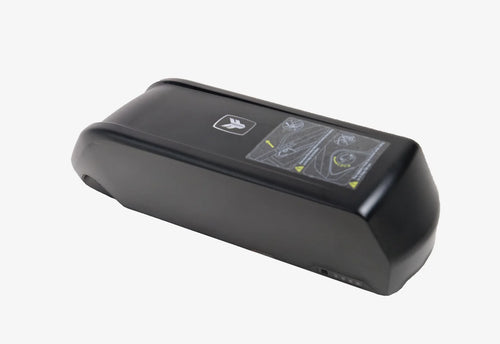
Battery size is the best predictor of real range. Multiply volts by amp-hours to get watt-hours (Wh). A 48V 15.6Ah pack is about 748Wh; a 48V 25Ah pack is about 1,200Wh. Treat range claims as best-case. Brands quote ranges measured at low assist, on flat ground, with a light rider. Hills, cold weather, headwinds, throttle use and heavier riders all cut range sharply. A useful habit is to divide the claimed top figure by two for a conservative planning number. Also check:
- Cell maker (named cells like Samsung or LG are a good sign). - Whether the battery is removable for indoor charging. - The price and availability of a replacement pack. - Safety certification. In the US, look for UL 2849 for the electrical system or UL 2271 for the battery. Uncertified packs are a real fire risk. ## 4. Motor: hub vs mid-drive, and torque
Most budget e-bikes use a rear hub motor, which is simple and cheap to maintain. Mid-drive motors sit at the cranks and use the bike's gears, which helps on steep hills but costs more. On spec sheets, torque in newton-meters (Nm) tells you more about hill climbing than the wattage figure. Peak watts are always higher than rated watts, so compare rated to rated. ## 5. Brakes, tires and suspension
E-bikes are heavier and faster than regular bikes, so brakes matter more. - Hydraulic disc brakes stop with less hand effort and need less adjustment than mechanical discs. Larger rotors (180mm and up) help on heavy bikes. - Fat tires (4 inches wide) add grip on sand, snow and gravel and smooth out rough roads, but add weight and rolling resistance. - Front suspension with lockout lets you soften the ride on trails and stiffen it on pavement. ## 6. Weight and storage
Fat-tire, dual-battery and full-suspension e-bikes commonly weigh well over 60 lb. If you need to carry the bike upstairs or lift it onto a car rack, weight may matter more than range. Many budget listings do not publish weight, so ask before buying. ## 7. Policies: the return math on a 60 lb box
E-bikes ship in huge boxes, which makes returns expensive. Before ordering, find:
- The return window, and any processing or restocking fee. - Whether you must keep the original box. - Warranty length on the frame, motor and battery separately, and whether labor is covered. - Where the bike ships from and whether remote areas are excluded. ## 8. Parts support after year one
The difference between a cheap e-bike and a disposable one is whether you can buy a battery, display, fork or tire for it in three years. A brand that sells model-specific parts directly is a meaningful advantage, even if the parts cost more than generic ones. ## Where the brands fit
| | G-FORCE | Fucare | Bike Ninja |
|---|---|---|---|
| What it is | US direct-to-consumer e-bike seller | Budget fat-tire e-bike brand | UK e-bike price comparison site |
| Price level | About $755 to $1,499 per bike | Catalog tops out at $1,699 | Retailer prices in pounds |
| Warranty | 1 year, frame and battery | 1 year advertised | Depends on retailer |
| Returns | 10% fee on any return or cancellation | 30-day trial advertised, terms not readable | Depends on retailer |
| Strength | Low sale prices, free shipping to lower 48 | Dual-battery and AWD models, deep parts shop | Price history, Cycle to Work estimates |
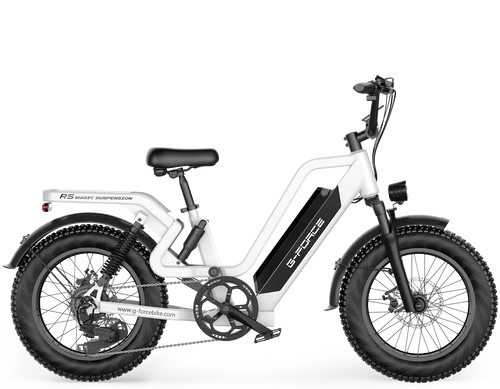
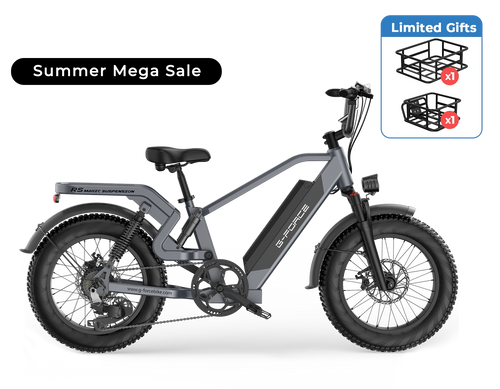
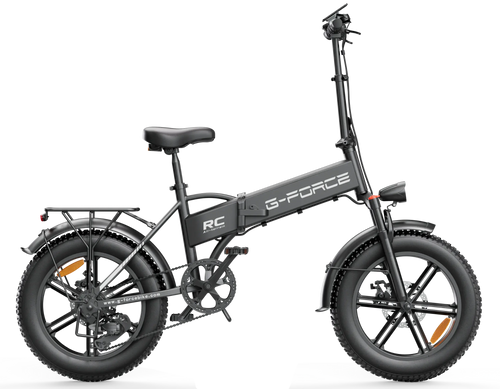
G-FORCE: best for low entry prices in the lower 48. The RS line pairs a 750W rear hub (1,300W peak, 85Nm) with hydraulic brakes and 748Wh or 1,200Wh batteries, at $1,299 to $1,499. The RC folding bike starts around $755. Shipping is free and fast, but a 10% processing fee applies to any returned or canceled order, and you need to keep the box for 14 days or pay $50 to $90 for a new one. Note that a 750W motor sits at the top of most US state limits. Fucare: best for range and parts support. Fucare's fat-tire lineup includes 30Ah dual-battery commuters, all-wheel-drive versions and a full-suspension two-seater. Its replacement parts shop is unusually deep for a budget brand, including a 996Wh LG-cell battery ($699) and model-specific forks ($260). The catch is that its shipping, return and warranty pages were not readable when we researched it, and the e-bikes themselves were not in our in-stock data. Confirm the 30-day trial and 1-year warranty terms in writing before ordering. Bike Ninja: best for UK shoppers comparing prices. It is not a shop. It compares UK retailer prices, shows price history, and estimates Cycle to Work savings for salary-sacrifice buyers. Use it to check whether a sale is real, then read the policies of the retailer you click through to, since delivery, returns and warranty all depend on that retailer. ## Budget tiers
- Under $1,000: folding or basic step-through bikes, usually hub motors and smaller batteries. Check certification carefully at this level. - $1,000 to $1,700: larger batteries (700Wh to 1,200Wh), hydraulic brakes, suspension forks and fat tires. - Above that: mid-drive motors, lighter frames and better-known component brands, mostly outside the brands covered here.