The short version
Rider gear exists to do three jobs: protect your head, protect your body when you slide and hit, and make sure drivers see you before that happens. Buy in that order. A certified helmet comes first, then certified armor and abrasion-resistant clothing, then visibility. Everything else is comfort and style.
Below are the seven things that matter most, the certification labels worth learning, and an honest look at the three motorsports stores we've reviewed. Only one of them, RiderBag, is one we can currently recommend.
1. Helmet certification comes first
In the US, every street-legal motorcycle helmet must meet the DOT standard (FMVSS 218), shown by a DOT label on the back. Many riders also look for ECE 22.06, the current European standard, which adds more impact points and tests. Snell is a voluntary, stricter certification popular with track riders. A helmet carrying two of these is a common sign of a well-tested lid.
Things to check:
- Type. Full-face helmets cover the chin, which takes a large share of impacts in crashes. Open-face and modular helmets trade some protection for airflow or convenience.
- Fit. Measure your head around the widest point, just above the eyebrows, and use that brand's size chart. A correct fit is snug all around with no pressure points, and the helmet shouldn't roll forward when you push the chin bar.
- Age and history. Replace a helmet after any crash, even if it looks fine. Many manufacturers suggest replacing one about every five years.
Red flag: novelty helmets with no certification label, or a store that won't tell you the certification. Helmets are also often final sale once worn, so try sizing before you buy.
2. Understand CE armor levels
Armor in jackets, pants and backpacks is tested to European standards, and the labels tell you a lot:
| Standard | Covers | What the level means |
|---|---|---|
| EN 1621-1 | Shoulders, elbows, hips, knees | Level 2 transmits less force than Level 1 |
| EN 1621-2 | Back (spine) | Level 2 must transmit under 9 kN in testing, half the Level 1 limit |
| EN 1621-3 | Chest | Level 1 or 2 |
| EN 17092 | Whole garments | Classes AAA (highest) to C |
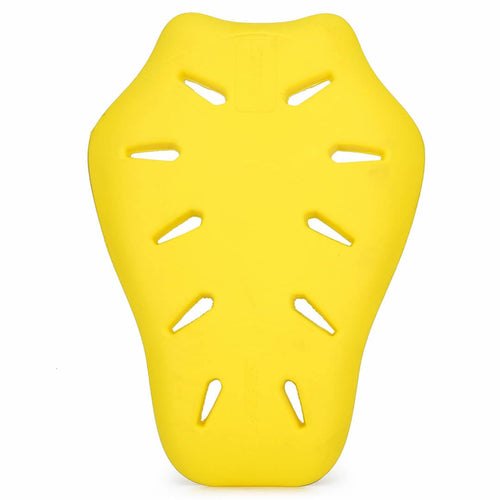
RiderBag's product page makes a fair point here: the foam pad in many riding jackets isn't certified armor at all, or is only Level 1. If your jacket has a back pocket with a thin foam insert, a certified Level 2 back protector is one of the cheapest safety upgrades you can make. RiderBag sells one alone for $49.95, certified to EN 1621-2 Level 2 and made of visco-elastic polyurethane that stays flexible until impact.
3. Abrasion resistance in jackets and pants
Armor handles impact; the outer shell handles sliding. Leather remains the abrasion benchmark, and heavy textiles (high-denier nylon or Cordura blends) trade some abrasion resistance for ventilation and weather protection. The EN 17092 class on the label is the most useful single number: AAA and AA garments are tested for higher-speed riding than A, B or C.
Look for double stitching in crash zones, armor pockets at shoulders, elbows and back, and adjusters that keep armor in place when you fall.
4. Gloves and boots
Your hands go out first in most falls. Look for gloves certified to EN 13594 with palm sliders and knuckle protection. For boots, EN 13634 covers motorcycle footwear; at minimum, choose over-the-ankle boots with a stiff sole and ankle protection rather than sneakers.
5. Visibility: fluorescent by day, reflective by night
A common rider complaint after a crash is the driver saying they never saw them. Two different materials solve two different problems:
- Fluorescent colors (hi-vis green, orange, red) stand out in daylight and at dusk.
- Retro-reflective material bounces headlights back to the driver at night but looks gray by day.
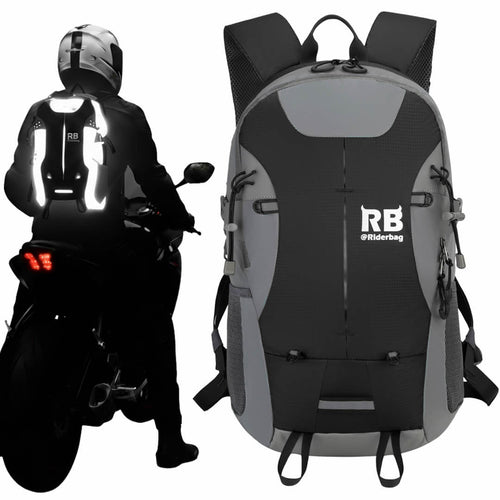
You want both. A bright helmet or jacket is the most effective option, and a hi-vis backpack adds a large, high-mounted visible area at the height drivers look. This is RiderBag's whole idea: the Reflektor35 (35 liters, $89.88) is built around a retro-reflective shell in six colors. RiderBag's own product notes say black versions offer no daytime advantage, so pick orange, green or red for traffic.
6. Carrying gear on the bike
If you commute, you need to carry a laptop, lock or change of clothes. Things to check in a riding backpack:
- Snug fit and a sternum strap so the bag doesn't shift at speed.
- Glove-friendly zipper pulls. The Reflektor35 has them, plus YKK zippers.
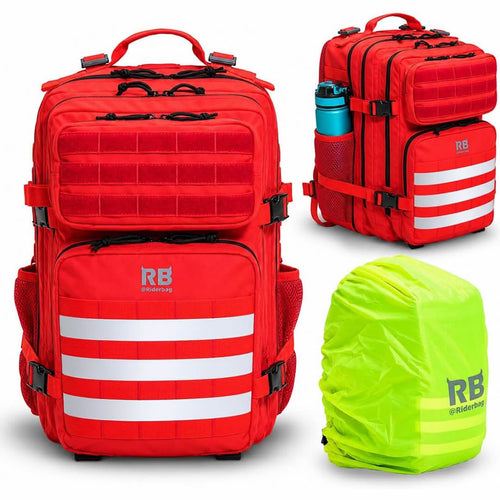
- Weather. Most packs are water-resistant, not waterproof. The Reflektor35 uses 600D nylon and, per RiderBag, comes with a rain cover.
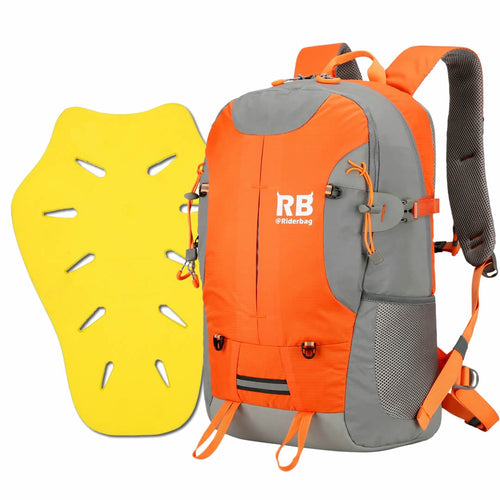
- Back protection. The Reflektor35 has a hidden pocket for a CE Level 2 spine protector, and the combo with the protector fitted is $129.95. Protection in a backpack only works while the bag sits tight against your back, so it complements, not replaces, a jacket with armor.
7. Buy from stores you can verify
Rider gear involves sizing, safety certifications and sometimes expensive parts, so the store's policies matter. Before you pay, confirm the return window, whether worn helmets or gear can come back, who pays return shipping and whether warranty claims go through the store or the manufacturer.
Where the brands we've reviewed fit
RiderBag: recommended for visibility and back protection. A focused store with 22 listings, mostly the Reflektor35 in different colors, plus the Xtreme 30L ($99.95) and 45L ($119.95) tactical packs and the standalone CE Level 2 spine protector. Policies are clear: orders process within 24 hours, standard US shipping is free (3 to 5 business days), returns are accepted for 30 days on unused items (60 days for purchases between November 1 and December 24), and manufacturing flaws get an exchange within 6 months. It publishes a phone number, email and Miami address. One inconsistency: the shipping page promises a free return label while the refund page says you pay return shipping, so ask first.
Turismo Racing: not recommended right now. When we checked, its online store returned a "Store unavailable" page with no catalog or policies visible. If you're set on this brand, contact it directly to confirm the store is open and how returns work before paying.
Orion Powersports: proceed with caution. We couldn't view its catalog, prices, contact details or policies. That isn't evidence of a problem, but for parts and safety gear, confirm fitment for your exact make, model and year and read the return policy before ordering. Pay with a method that offers buyer protection.
A sensible budget plan
- First: a DOT-certified (ideally also ECE 22.06) full-face helmet that fits.
- Second: a jacket with certified armor, or add a $49.95 Level 2 back protector to the jacket you have.
- Third: certified gloves and over-the-ankle boots.
- Fourth: visibility. A hi-vis backpack like the Reflektor35 combo ($129.95) adds both visibility and back armor for commuters.