
Solar shopping splits into two jobs. One is building a power system: panels, a charge controller, batteries, and an inverter for an RV, cabin, or home backup. The other is buying self-contained solar lights that charge by day and run by night, no wiring required. The two brands we have reviewed here each own one of those jobs. ECO-WORTHY sells LiFePO4 batteries, panels, controllers, inverters, and complete off-grid kits. Langy sells solar street, yard, and parking lot lights, plus solar attic fans and LED shop lights.
Ranking and quick comparison
| | ECO-WORTHY | Langy |
|---|---|---|
| Rank | 1, best overall | 2, best for solar lighting |
| What it sells | LiFePO4 batteries, panels, charge controllers, inverters, kits | Solar street and yard lights, solar attic fans, UFO high bays, bug zappers |
| Price range we saw | $45.99 controller to $3,799.99 three-phase inverter | About $50 feeder lights to $419 light-and-pole kits |
| Shipping | 1 to 3 days processing, then 3 to 5 business days from US or Canada; freight kits 5 to 14 days | Free, 3 to 7 days via UPS or USPS; handled in 1 to 2 days |
| Returns | 30 days, buyer pays return shipping; defects reported within 14 days are covered | 30 days for any reason from purchase, undamaged with packaging |
| Warranty | 10 years on batteries (per FAQ) | 1 year free repair or replacement; paid extensions up to 10 years on attic fans |
1. ECO-WORTHY: best overall, and best for building a solar system
ECO-WORTHY takes the top spot on low battery prices and full-system coverage. You can buy every major component from one brand, and its bundles list every included part, which makes kit comparisons easier.
Batteries are the headline:
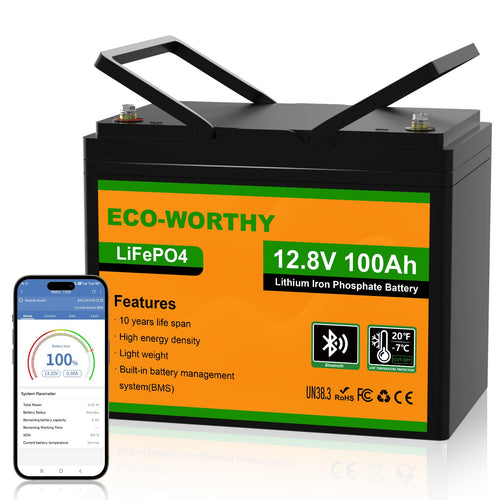
- 12V 100Ah LiFePO4 ($219.99, or $199.99 each in 2 or 4 packs): 1,280Wh, 100A continuous, Bluetooth monitoring, and low-temperature charge protection. A common drop-in size for RVs and small solar setups.
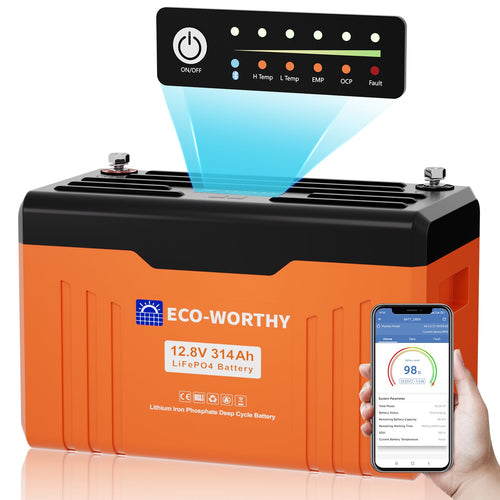
- EnergyTrek 12V 314Ah ($499.99): about 4,019Wh in one battery with a 200A BMS, rated for 6,000+ cycles. Roughly three 100Ah batteries' worth of storage, though weight and dimensions aren't listed.
- Cubix100 48V server rack battery ($889.99): 5.12kWh per module for home backup with a 48V inverter.
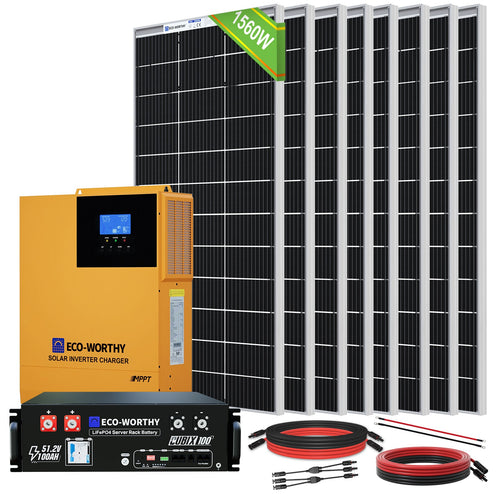
For panels, the 195W N-type bifacial panel ($139.99) is the same unit used in the larger kits, so you can expand later. Note the title claims 25% efficiency while the spec list says 19.60% module efficiency. The 1560W off-grid kit ($2,499.99) bundles eight of those panels with a 3,500W 48V inverter and a 5,120Wh battery, but outputs 120V only and doesn't list mounting hardware or battery cables.
The FAQ states a 10-year warranty on batteries for failures not caused by the user, and modifying a product voids it. Support is reachable by published phone numbers and email.
Watch for: change-of-mind returns are on you to ship back, and the refund page describes them as a partial refund. Damaged or dead-on-arrival claims must be reported within 14 days with photos or video. Some compare-at prices look inflated. The listed company address is in Hong Kong, so support runs by phone and email, and there's no design or installer service. System design is on you.
2. Langy: best for solar lights and attic fans
Langy is the easier buy for someone who just wants light where there's no power. Its 30-day money-back guarantee covers any reason (from the date of purchase), shipping is free, and it publishes a Richardson, Texas address and phone support. Many listings link spec sheets and IES files, which help plan high bay spacing in a shop.
The best-documented picks:
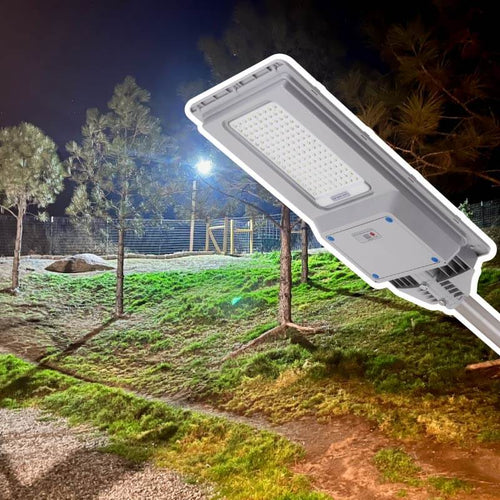
- JD-300W solar street light ($109.69): a 28W panel, 25,000mAh battery, radar motion sensor, remote, IP65, and mounting up to 22 feet.
- 70W dusk-to-dawn light ($69.69): 7,000 lumens, a 5,000mAh battery, and a security mode that stays dark until triggered. Small battery, so expect shorter runtimes after cloudy days.
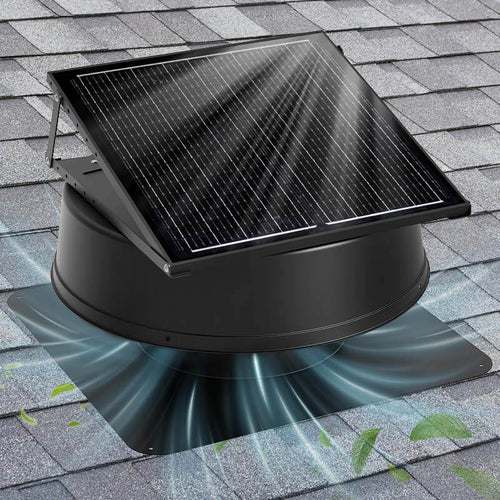
- 55W solar attic fan ($259.69): up to 1,200 CFM for attics up to 2,200 square feet, with a thermostat and a 65-foot remote. Roof cutting and flashing are involved.
- 200W UFO high bay ($94.69): a wired LED shop light, 30,000 lumens, for 16 to 20 foot ceilings, with a 5-year limited warranty.
Watch for the wattage trap. Solar light wattage in titles is a marketing class, not real power. The "300W" street light runs from a 28W panel. Some titles and spec tables also disagree on lumens (the JD-300W says 30,000 in the title and 25,000 in the spec table). Judge by lumens, battery capacity, and panel size. Extended warranty claims carry fees tied to the current price, and labor isn't covered.
How to choose solar and off-grid power gear
1. Pick your system voltage first. 12V suits RVs, vans, and small cabins. 24V halves current for the same power, which means thinner cables in mid-size systems. 48V is standard for home backup and large inverters. Batteries, controller, and inverter must all match.
2. Size batteries in watt-hours. Volts times amp-hours gives watt-hours. Add up what you run per day (watts times hours) and add margin for cloudy days. A 12V 100Ah LiFePO4 battery stores about 1,280Wh.
3. Choose LiFePO4 over lead-acid for daily cycling. LiFePO4 is lighter, can be discharged deeper, and lasts far more cycles. Check for low-temperature charge protection if you camp in winter; ECO-WORTHY's batteries block charging below 0°C.
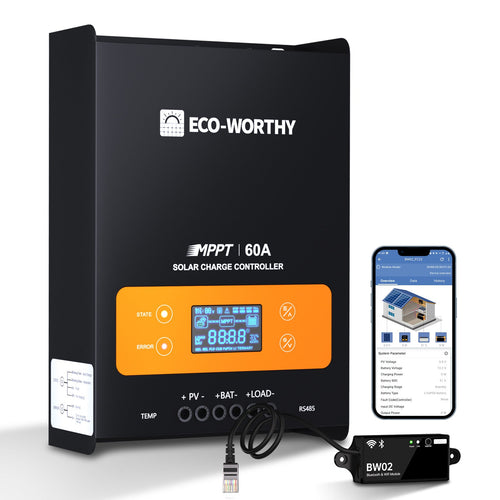
4. Use MPPT for anything beyond a small setup. PWM controllers like ECO-WORTHY's $45.99 30A unit are fine for one panel on a shed. MPPT controllers, like its $189.99 60A model, harvest more from higher-voltage panels and grow with your system. Get the maximum PV input voltage before you wire panels in series.
5. Check the inverter's output. 120V only means no 240V appliances like well pumps or dryers. Split-phase units such as the Liber 10KP ($1,549.99) give both 120V and 240V. Grid-tied and whole-home work usually needs a licensed electrician and permits.
6. For solar lights, read the spec table, not the title. Compare lumens, battery mAh, panel watts, IP rating, and operating temperature range. Langy's 40,000-lumen parking lot light lists a 32°F to 110°F operating range, which rules out cold-winter sites.
7. Plan the mounting. Street lights need a pole of the right diameter and often a concrete base. Bifacial panels only gain from the back side when raised over reflective ground.
Who should buy what
- First RV lithium upgrade: ECO-WORTHY 12V 100Ah.
- Van or camper with big loads: ECO-WORTHY EnergyTrek 314Ah.
- Cabin or backup starter system: ECO-WORTHY 1560W 48V kit, plus mounts and cables.
- Growing DIY array: ECO-WORTHY 60A MPPT controller and 195W panels.
- Dark driveway or barn yard: Langy JD-300W street light.
- Side yard or shed security: Langy 70W dusk-to-dawn light.
- Hot attic: Langy 55W solar attic fan, with a roofer if needed.
Bottom line
ECO-WORTHY is the brand to build a solar power system around, with low LiFePO4 prices, a stated 10-year battery warranty, and every component under one roof, as long as you're comfortable designing the system yourself. Langy is the better pick for standalone solar lights and attic fans, with any-reason returns and US-based support, provided you ignore the inflated wattage labels and compare real specs.