
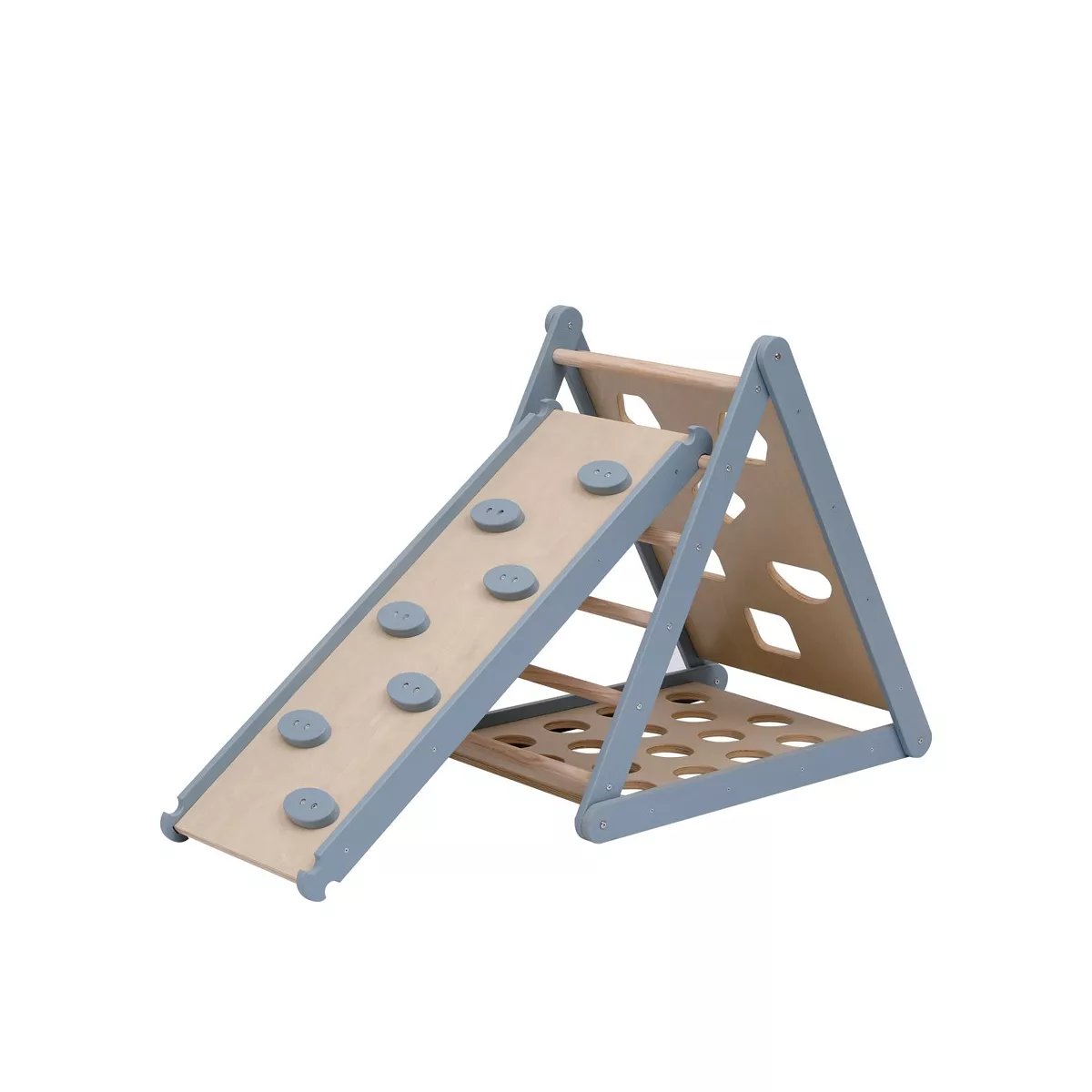
A good STEM toy gets used for months; a bad one gets opened on a birthday and forgotten by the weekend. The difference usually comes down to fit: the right age, the right skill level, the right space, and the hardware your household already has. Below are seven things to check before you buy, illustrated with real products and policies from the five toy and STEM brands we have reviewed: Makeblock (coding robots), Abacus Brands (VR and AR science kits), Funphix (fort kits and indoor climbers), Nikola Toy (metal desk toys and model kits for adults), and Game Kiddy (a toy shop we can't currently recommend).
1. Match the age range, and read it as a floor
Age labels are about safety and frustration, not just interest. Toys with small parts generally carry warnings for children under 3, and a kit labeled 5+ assumes fine motor skills and patience a 3-year-old won't have yet.
Examples from our research:
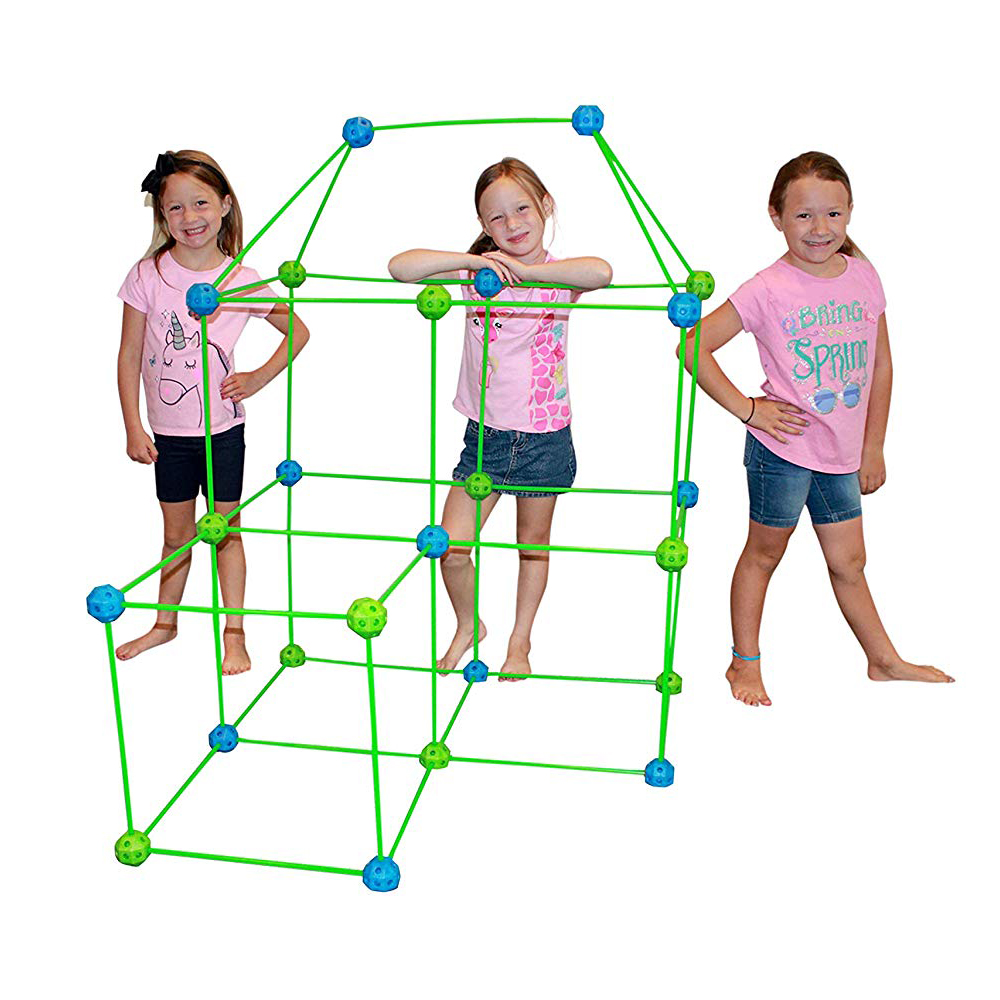
- Funphix fort kits (like the 77-piece set at $67.04) are labeled 5+, while its Pikler climbing triangle ($249) is made for ages 1 to 4 and its 371-piece Explorer Set ($499) is labeled 12 months and up with adult assembly.
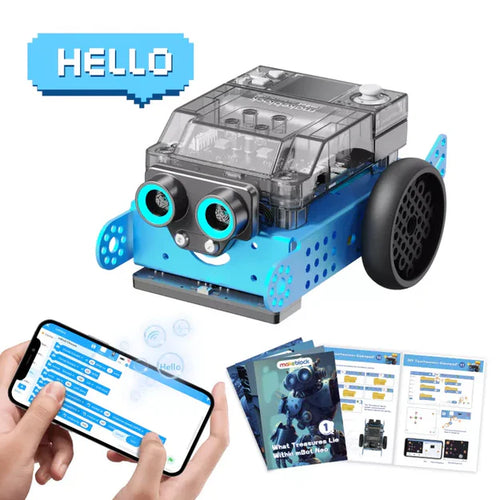
- Makeblock's mBot2 coding robot suits kids roughly 8 and up.
- Abacus Brands kits are aimed at elementary to middle school, but several listings don't state an age range, so check the box or ask.
- Nikola Toy's catalog is aimed at adult collectors. Items like the Grandmaster-V10 slingshot ($89.90) are not children's toys.
Rule: if a listing has no age guidance at all, ask before buying for a young child.
2. Look for a learning path, not a one-time trick
The best STEM kits grow with the child. A robot that only follows a line gets boring; one that moves from drag-and-drop blocks to real code keeps going.
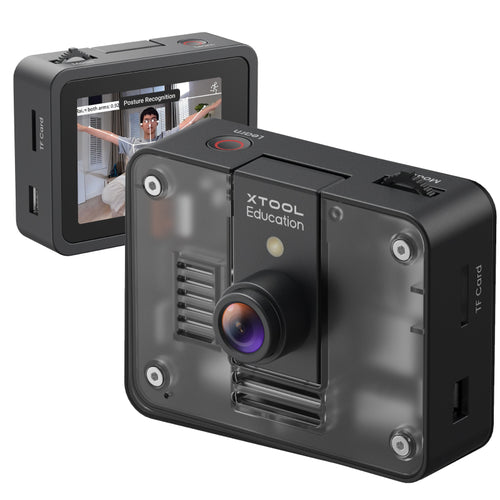
Makeblock is the clearest example. The mBot2 ($149.99 for a single robot) has an aluminum frame, Bluetooth and Wi-Fi control, and lets students progress from block-based coding to Python. Add-ons extend it: the AI Camera 2.0 ($129.99) adds nine built-in AI functions and custom model training, and mBuild sensor packs start at $47.99 for five sensors. Spare parts are cheap, like a $10.99 encoder motor.
Funphix takes a physical version of the same idea: all its fort kits are cross-compatible, so a $67 starter kit can be combined with later sets for bigger builds.
Watch the cost creep. Expansion is where totals climb. Start with the core kit and add modules once the basics are mastered.
3. Check what hardware the toy needs
Many modern STEM kits are hybrids that rely on a phone or tablet. That's not a problem, but it's a cost and a compatibility question.
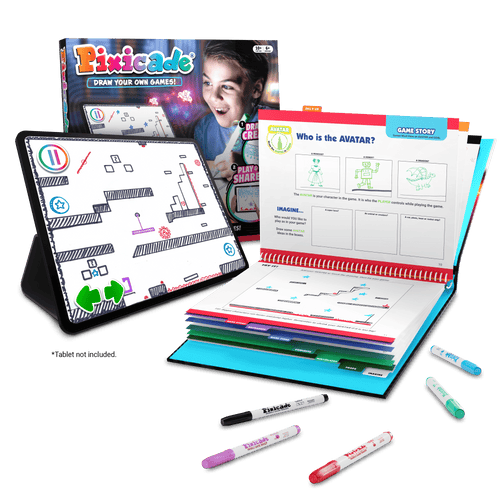
Abacus Brands' VR kits use a smartphone inside the included goggles. Its FAQ says you need Android 8.0 or newer, or an iPhone 6S or newer, and tablets won't fit the goggles. The Bill Nye VR Science Kit ($59.99) pairs an 80-page AR-enabled book with VR goggles and materials for hands-on projects like a lava lamp and rockets. Pixicade ($24.99) turns drawings into playable games via an app. Several other listings don't state goggle inclusion or phone requirements, so confirm before buying.
Makeblock's mBot2 is controlled by phone, gamepad, or its own programs, and its add-ons only work with mBot2 or CyberPi.
4. Balance screen time with hands-on work
If you're buying a STEM kit partly to reduce screen time, look at what's physical in the box. The Bill Nye kit includes experiment materials. Professor Maxwell's VR Dinosaurs ($49.99) has a 30-page activity book with 12 hands-on projects. National Geographic VR World Wonders ($39.99) adds a 3D Colosseum puzzle. Funphix forts and climbers are screen-free entirely.
5. Measure your space before buying anything big
Large play equipment fails when it doesn't fit the room or the wall.
- The Funphix Pikler set is about 35 by 22 by 32 inches.
- Its 8-in-1 Swedish ladder gym ($359) mounts to the wall and needs secure fixing into studs; the listing doesn't give dimensions or a weight limit.
- The steel Jungle Climber ($329) is 110 by 71 by 71 inches and needs a level area plus soft surfacing.
- Fort kits need floor space and a sheet or blanket; most basic kits don't include a cover, though themed kits like the Princess Castle ($80.30) and Super Soldier ($77.72) do.
6. Know the return rules before you open the box
Toys are often bought as gifts, and gift returns are where policies bite:
| Brand | Return terms we found |
|---|---|
| Abacus Brands | 30 days from receipt with RMA; no restocking fee if unopened; used items not refundable; you pay return shipping |
| Makeblock | 30 days from dispatch; unused and unopened only; you pay return shipping; US orders only |
| Nikola Toy | Cancel within 5 hours; personal-reason returns at your cost; no warranty terms published |
| Funphix | 30 days from purchase; refunds issued minus 15% |
| Game Kiddy | Store unavailable; no policies visible, so we do not recommend it |
The pattern: once a kit is opened, most of these stores won't take it back. Keep gifts sealed until you're sure, and on big-ticket Funphix items remember a return costs 15% of the price.
7. Plan for shipping time
Delivery times vary widely. Makeblock quotes 1 to 3 days of handling plus 7 to 10 business days of delivery, with free US shipping over $39.99. Nikola Toy's free worldwide shipping takes 7 to 15 business days, with DHL Express at 2 to 5. Funphix doesn't publish a shipping policy, so ask about cost and timing on large playsets. Several Abacus listings were tagged pre-order, so check ship dates before counting on a birthday delivery.
Red flags when buying toys online
- No visible store or policies. Game Kiddy's storefront showed "Store unavailable" with zero products when we checked. Don't order from a shop that can't show you its return policy.
- No age range or small-parts warning on a toy for young children.
- Listings with no description at a high price. Several Nikola Toy items, like a $359 RC tank and a $369 engine kit, had none.
- Pre-order tags without a ship date.
- Projectile toys sold without safety guidance. Those need eye protection, a safe backstop, and adult use only.
Where each brand fits
- Abacus Brands is the best gift pick for curious kids with access to a compatible phone, thanks to big-name licenses (Bill Nye, National Geographic, DK) and no restocking fee on unopened returns.
- Makeblock is the best long-term STEM investment for kids 8 and up, homeschoolers, and classrooms, with a real path from blocks to Python. US buyers only.
- Funphix is the pick for active, screen-free play: forts for ages 5 and up and climbers for toddlers. Factor in the 15% return deduction.
- Nikola Toy suits adult hobbyists and desk-toy collectors, not children. Ask for specs on high-priced items.
- Game Kiddy gets a caution until its store is back online with published policies.
Bottom line
Choose by the child's age and skills first, then check what devices and space the toy needs, then read the return rules before opening the box. For most families, a Makeblock mBot2 for a budding coder, an Abacus VR kit for a curious reader, or a Funphix fort kit for an energetic kid will get far more use than an impulse buy.